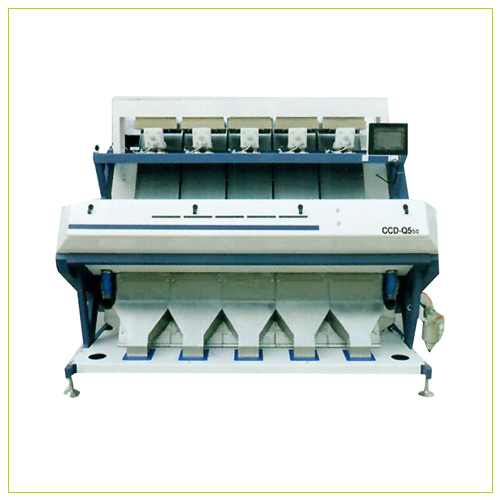
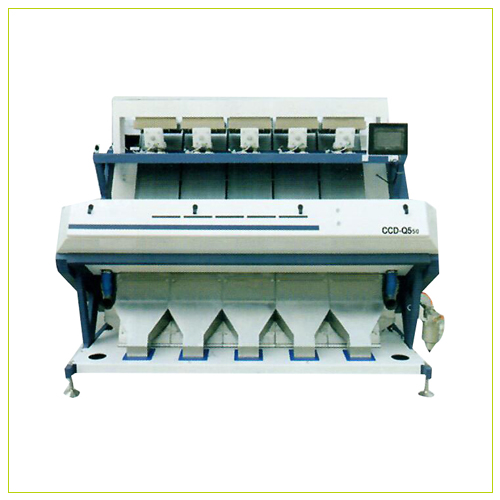
An intelligent grain color sorter is an essential piece of equipment for modern grain and food processing plants that need consistent product quality, efficient impurity removal, and reduced manual sorting. By combining a reliable camera image acquisition system, intelligent image processing algorithms, and high-speed solenoid valves, this grain color sorting machine can identify and remove discolored, damaged, or unwanted particles from the product stream.
Our intelligent image processing grain color sorter is designed for a wide range of applications, including rice, wheat, maize, beans, pulses, nuts, seeds, and other granular products. Adjustable sorting parameters allow the machine to be adapted to different raw materials and quality requirements.
The system is suitable for grain processing factories, food processing plants, seed processors, agricultural product suppliers, and other businesses looking for an automated optical sorting solution.
In the realm of grain processing, the demand for high-quality and contaminant-free grains is paramount. With the advent of advanced technology, color sorters equipped with intelligent image processing algorithms have revolutionized the sorting process, enabling efficient removal of impurities and defective grains. We supply high quality intelligent image processing algorithms grain color sorter to consumers.
What Is a Grain Color Sorter?
A grain color sorter is an optical sorting machine that uses cameras, image processing technology, and precision air ejection to separate acceptable grains from unwanted materials.
During operation, grains move through the feeding and chute system in a controlled stream. The camera system captures images of the individual particles as they pass through the inspection area. Intelligent image processing software analyzes their visual characteristics and compares them with the selected sorting criteria.
When a defective or unwanted particle is detected, the corresponding solenoid valve activates at the appropriate moment and uses a short burst of compressed air to remove it from the product stream.
This automated process can replace a significant amount of manual visual inspection while providing more consistent sorting results.
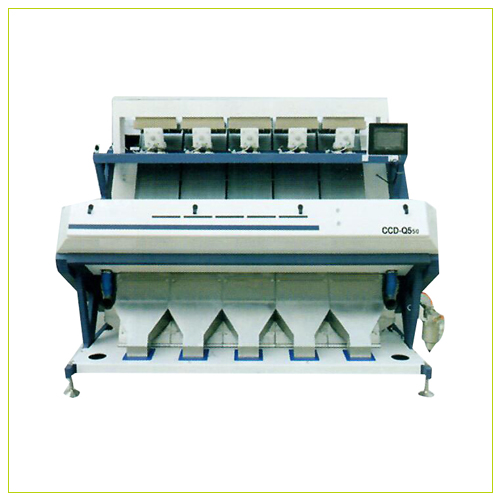
Specifications
| optimzed carryover | power | power supply | dimesion LxWxH(mm) | weight |
| ≥10:1 | 1.5 | 220V/50H | 1200x1462x1756 | 700 |
| ≥10:1 | 1.5 | 220V/50H | 2100x1491x1860 | 950 |
| ≥10:1 | 2 | 220V/50H | 2100x1491x1860 | 1050 |
| ≥10:1 | 2 | 220V/50H | 2100x1491x1860 | 1070 |
| ≥10:1 | 3 | 220V/50H | 2290x1560x1794 | 1150 |
| ≥10:1 | 2 | 220V/50H | 2700x1491x1930 | 1300 |
| ≥10:1 | 3 | 220V/50H | 2970x1560x1794 | 1500 |
The system boasts a highly reliable camera image acquisition system paired with advanced intelligent image processing algorithms, ensuring precise sorting and a remarkable elimination rate of 10:1. Its flexible loading ratio and wide application range make it adaptable to various sorting needs, while its high-quality solenoid valve guarantees optimal performance. With simple operation and user-friendly interface, it's easy to use for operators of all skill levels.
Working Principle of Intelligent Image Processing Algorithms Grain Color Sorter
The intelligent image processing algorithms grain color sorter operates on a sophisticated yet straightforward principle. As grains flow through the machine's feed system, they are subjected to a high-resolution camera system that captures detailed images of each individual grain. These images are then rapidly analyzed by advanced image processing algorithms, which meticulously assess the color, size, shape, and texture of each grain.
Based on predefined sorting criteria and parameters, the algorithms categorize the grains into different classes: good grains and defective grains. Defective grains may include discolored grains, foreign materials, damaged grains, or other imperfections. Once classified, the sorter utilizes precise pneumatic or mechanical mechanisms to selectively remove the defective grains from the main stream of grains.
The sorting process is executed in real-time, with split-second decision-making ensuring swift and accurate separation of grains. The intelligent algorithms continuously adapt and optimize their sorting criteria based on feedback from previous sorting operations, further enhancing efficiency and accuracy.
The sorting process can be divided into five main stages:
| Stage | Process | Main Function |
|---|---|---|
| 1 | Feeding | Delivers raw material evenly into the sorting system |
| 2 | Image acquisition | Cameras capture images of individual particles |
| 3 | Image analysis | Algorithms identify color and visible quality differences |
| 4 | Sorting decision | The system determines whether a particle should be rejected |
| 5 | Air ejection | Solenoid valves remove unwanted particles from the product stream |
The machine performs these operations continuously. Because detection and rejection take place in real time, the system can process a large volume of granular material without relying on continuous manual inspection.
The final sorting performance depends on the raw material, defect characteristics, machine configuration, feeding conditions, and selected sorting parameters.
In summary, the working principle of the intelligent image processing algorithms grain color sorter involves the rapid capture and analysis of grain images, followed by precise sorting actions to separate high-quality grains from defective ones. This seamless integration of advanced technology and precise sorting mechanisms ensures the delivery of premium-quality grains while minimizing waste and maximizing productivity.
Intelligent Image Processing for More Consistent Sorting
The image processing system is one of the most important components of an optical grain sorter. Instead of relying only on manual visual inspection, the machine uses digital images to identify differences between acceptable and defective particles.
Depending on the application, the system can evaluate visual characteristics such as:
Color differences
Dark or discolored particles
Visible surface defects
Foreign materials
Abnormal particle appearance
Shape and size differences where supported by the selected configuration
Operators can adjust sorting criteria according to the characteristics of the raw material and the required finished-product quality.
This makes the machine suitable for applications where relatively small visual differences need to be identified quickly and consistently.
High-Reliability Camera Image Acquisition System
Reliable image acquisition is critical for optical sorting performance. The camera system needs to capture clear and consistent images while the material moves through the sorting area at high speed.
The grain color sorter uses a dedicated image acquisition system to inspect the material stream and provide image data for real-time processing.
A stable imaging system can help the sorter:
Detect color differences more consistently
Identify unwanted particles in the product stream
Reduce dependence on manual inspection
Maintain stable sorting performance during continuous operation
Support different sorting settings for different raw materials
For commercial grain processing, consistent image quality is particularly important because changes in lighting, material distribution, or feeding conditions can affect the final sorting result.
High-Quality Solenoid Valve Ejection System
After the image processing system identifies a particle that does not meet the selected criteria, the machine needs to remove it quickly and accurately.
The solenoid valve system controls the compressed-air ejection process. The valve opens at the calculated moment and generates a short air pulse that diverts the target particle away from the acceptable product stream.
A responsive ejection system is important because the time between detection and rejection is extremely short.
The result is a coordinated process:
Camera detection → Image processing → Sorting decision → Valve activation → Defect removal
The original product specifications describe an optimized carryover ratio of ≥10:1. This figure should be evaluated together with the actual raw material, defect concentration, and operating conditions rather than being treated as a universal sorting-accuracy percentage.
Application Range of Intelligent Image Processing Algorithms Grain Color Sorter
The Intelligent Image Processing Algorithms Grain Color Sorter is a versatile solution that can be applied across a wide range of grain processing scenarios. Its advanced technology and customizable sorting criteria make it suitable for sorting various types of grains with precision and efficiency. Some of the common applications of this color sorter include:
Rice Sorting: The color sorter can accurately separate broken grains, discolored grains, and foreign materials from premium-quality rice, ensuring only the highest-grade rice reaches consumers.
Wheat Sorting: It is effective in removing impurities, diseased grains, and other defects from wheat kernels, enhancing the quality and purity of processed wheat products.
Maize Sorting: The color sorter can efficiently sort maize kernels based on color, size, and shape, ensuring uniformity and consistency in the final product.
Bean Sorting: It is ideal for sorting various types of beans, including kidney beans, black beans, and soybeans, by removing defective grains and foreign materials to improve overall quality.
Pulse Sorting: The color sorter can accurately separate pulses such as lentils, chickpeas, and peas, ensuring uniformity in size and color and removing damaged or discolored grains.
Nut Sorting: It is capable of sorting nuts like almonds, cashews, and peanuts, removing shells, foreign materials, and defective nuts to produce high-quality nut products.
Seed Sorting: The color sorter can be used to sort seeds for agriculture or food processing purposes, ensuring uniformity in seed size, shape, and color and removing impurities.
Grain Blending: It can also be used for grain blending applications, where different types of grains are sorted and blended to create custom grain mixes according to specific customer requirements.
Overall, the Intelligent Image Processing Algorithms Grain Color Sorter offers versatility and flexibility, making it an indispensable tool for optimizing grain processing operations across various industries. Its ability to accurately sort grains based on customizable criteria ensures the delivery of high-quality products while maximizing efficiency and minimizing waste.
| Material | Typical Sorting Purpose |
|---|---|
| Rice | Remove discolored grains, impurities, and unwanted particles |
| Wheat | Separate visually defective kernels and foreign materials |
| Maize | Remove unwanted or visually different maize kernels |
| Kidney beans | Separate discolored and defective beans |
| Black beans | Improve color uniformity and remove unwanted particles |
| Soybeans | Separate visually abnormal beans and foreign materials |
| Lentils | Improve product uniformity and remove defects |
| Chickpeas | Separate defective or discolored particles |
| Peas | Improve color and quality consistency |
| Peanuts | Remove unwanted or defective particles |
| Seeds | Improve visual uniformity and remove impurities |
| Nuts | Sort products according to selected visual characteristics |
Key Features
High-Speed Processing:
Intelligent image processing algorithms enable grain color sorters to rapidly analyze large volumes of grains, sorting them based on color, size, shape, and texture with remarkable speed and accuracy.
Accurate Detection of Defects:
By analyzing high-resolution images of grains in real-time, the algorithms can accurately detect defects such as discolored grains, foreign materials, mold, and insect damage, ensuring only high-quality grains pass through the sorting process.
Customized Sorting Criteria:
Operators can customize sorting criteria based on specific quality requirements, allowing for precise sorting of grains according to desired parameters such as color shades, size variations, and shape irregularities.
Adaptive Learning Capability:
Advanced algorithms incorporate machine learning techniques, enabling the color sorter to adapt and improve its sorting accuracy over time. The system continuously learns from sorting outcomes, refining its algorithms to optimize performance.
Real-Time Monitoring and Feedback:
Operators have access to real-time monitoring of sorting processes, with the ability to receive instant feedback on sorting outcomes. This allows for timely adjustments to sorting parameters, maximizing efficiency and quality control.
Minimization of False Rejects:
By precisely identifying and isolating defective grains, intelligent image processing algorithms minimize false rejects, ensuring minimal loss of good grains during the sorting process.
Integration with Sorting Equipment:
Intelligent image processing algorithms seamlessly integrate with modern sorting equipment, enhancing their capabilities and enabling efficient operation in grain processing facilities of all sizes.
Intelligent image processing algorithms play a crucial role in revolutionizing grain sorting processes, offering unmatched efficiency, accuracy, and versatility. By harnessing the power of advanced technology, grain color sorters equipped with these algorithms ensure the delivery of premium-quality grains to consumers while minimizing waste and optimizing production efficiency. As the demand for high-quality grains continues to rise, integrating intelligent image processing algorithms into grain sorting systems is essential for meeting consumer expectations and maintaining competitiveness in the grain processing industry.
Grain Color Sorter vs. Manual Sorting
For small processing operations, manual inspection may appear simple. However, manual sorting becomes increasingly difficult as production volume increases.
| Factor | Manual Sorting | Grain Color Sorter |
|---|---|---|
| Sorting speed | Limited by labor | Continuous automated operation |
| Consistency | Can vary between workers | Computer-controlled criteria |
| Labor requirement | High | Lower |
| Continuous operation | Difficult | Designed for continuous processing |
| Adjustment | Depends on operator experience | Sorting parameters can be adjusted |
| Quality control | More subjective | Based on programmed visual criteria |
| Large-volume processing | Less efficient | Better suited to automated production |
The main advantage of an optical sorter is not simply replacing workers. It is creating a more consistent sorting process that can be integrated into a modern grain processing line.
How to Choose the Right Grain Color Sorter
Choosing a color sorter only by machine size or motor power can result in an unsuitable configuration. A better approach is to evaluate the complete sorting application.
Consider the following factors before purchasing:
1. Material Type
Rice, beans, wheat, maize, seeds, and nuts have different physical characteristics. The machine configuration should match the specific product.
2. Defect Type
Tell the manufacturer what needs to be removed. Common requirements include discolored grains, damaged particles, foreign materials, and other visually abnormal products.
3. Required Capacity
Production capacity is one of the most important selection criteria. The required throughput should be confirmed based on the actual raw material rather than estimated only from machine dimensions.
4. Desired Product Quality
Some processors require basic impurity removal, while others need a much cleaner and more uniform finished product. Higher quality requirements may require different sorting settings or multiple sorting stages.
5. Existing Production Line
The sorter should be compatible with the upstream feeding, cleaning, grading, conveying, and downstream packaging equipment.
Why Use an Optical Grain Sorting Machine?
An optical grain sorter can provide several operational advantages for modern processing plants.
Improved product consistency: Automated visual inspection applies defined sorting parameters continuously.
Reduced manual labor: The machine reduces the amount of manual sorting required for continuous production.
Better process efficiency: Automatic detection and pneumatic rejection allow unwanted particles to be removed during production.
Flexible applications: The same machine platform can be configured for different agricultural products.
Reduced product loss: Accurate rejection can help separate defective particles while retaining acceptable product.
Easier quality management: Operators can monitor and adjust sorting parameters according to production requirements.
These advantages make optical sorting particularly useful when product appearance and purity are important commercial requirements.
Sorting Process Optimization
Good machine performance depends on more than the sorter itself. Proper preparation and operation can significantly affect the final result.
Before color sorting, the raw material should be properly cleaned and presented to the sorter. Excessive dust, stones, oversized particles, or poor feeding distribution may affect image quality and sorting stability.
For best results:
Clean the raw material before optical sorting.
Maintain an even material flow.
Keep the inspection area clean.
Check the camera and optical components regularly.
Adjust sorting sensitivity according to the product.
Inspect the rejected and accepted streams during production.
Recalibrate the system when the raw material changes significantly.
A stable feeding system is especially important because evenly distributed particles allow the camera system to obtain clearer images and give the ejection system more precise timing.
Suitable for Beans and Pulses
Beans and pulses can be challenging products for manual sorting because commercial products often contain particles with relatively small differences in color and appearance.
The grain color sorter can be applied to products such as:
Kidney beans
Black beans
Soybeans
Green peas
Chickpeas
Lentils
Other pulses
For bean processing, the sorting criteria can be selected according to the desired product appearance. Defective or discolored beans can be separated from acceptable beans, helping processors improve overall visual consistency.
For commercial bean processing projects, we recommend testing representative samples before confirming the final machine configuration.
Suitable for Rice, Wheat and Maize
The machine can also be incorporated into conventional grain processing lines.
For rice, the sorter can help separate visually different or defective grains after the preceding cleaning and milling processes.
For wheat, optical sorting can provide an additional quality-control stage for removing visually unwanted kernels or foreign material.
For maize, the machine can help separate kernels that differ in color or visible appearance from the target product.
The optimal sorting settings depend on the raw material and the required finished-product specification.
OEM and Customized Grain Sorting Solutions
Different processing plants have different requirements. A small bean processor may need a compact machine, while a large grain-processing facility may require a higher-capacity configuration integrated into an automated production line.
Customization can be considered for:
Sorting criteria
Product type
Machine configuration
Production capacity
Existing processing-line integration
Electrical requirements
OEM branding and supply
Before placing an order, provide information about your raw material, required capacity, product quality target, and existing equipment. This allows the appropriate configuration to be recommended.
Grain Color Sorter Buying Checklist
Use the following checklist when comparing suppliers:
| Question | Why It Matters |
|---|---|
| What materials can the machine sort? | Confirms application compatibility |
| What is the actual capacity for my material? | Prevents unrealistic production estimates |
| What defects can it detect? | Confirms whether it meets your quality requirements |
| What is the carryover ratio? | Helps evaluate product recovery during rejection |
| What is the power requirement? | Helps prepare the factory electrical system |
| What air supply is required? | Important for pneumatic ejection systems |
| Can sorting parameters be adjusted? | Allows different products to be processed |
| Is sample testing available? | Provides a more realistic performance reference |
| Is technical support available? | Helps with installation and commissioning |
| Can the machine be integrated into a production line? | Important for complete processing projects |
A supplier should ideally evaluate your actual raw material before finalizing the model and configuration.
Why Choose Our Grain Color Sorter?
Our intelligent image processing grain color sorter is designed as a practical solution for automated grain and agricultural product sorting.
The equipment combines a reliable camera image acquisition system, intelligent image processing technology, and high-quality solenoid valves in one automated sorting system.
Key advantages include:
Intelligent image-based sorting
Flexible sorting parameters
Wide material compatibility
Automated defect removal
User-friendly operation
Multiple machine configurations
OEM and customized solutions
Suitable for international grain processing projects
The machine can be supplied as an individual sorting unit or considered as part of a complete grain processing line.
FAQ
What is an intelligent image processing algorithms grain color sorter?
An intelligent image processing algorithms grain color sorter is a machine equipped with advanced technology that uses cameras and algorithms to analyze and sort grains based on color, size, shape, and texture.
How does the intelligent image processing algorithms grain color sorter work?
The sorter captures images of grains as they pass through, and the intelligent algorithms analyze these images to identify and separate grains with defects or impurities from the good grains.
What types of grains can be sorted using this machine?
This machine can sort a wide variety of grains, including rice, wheat, maize, beans, pulses, nuts, seeds, and more.
What are the benefits of using an intelligent image processing algorithms grain color sorter?
The benefits include improved grain quality, increased efficiency, reduced labor costs, and enhanced productivity. It also helps in minimizing waste by accurately separating defective grains from good ones.
Is the machine easy to operate and maintain?
Yes, our intelligent image processing algorithms grain color sorter is designed for ease of operation and maintenance. It comes with a user-friendly interface and requires minimal maintenance.
Can the machine be customized to meet specific sorting requirements?
Yes, we offer customization options to tailor the machine to your specific sorting needs, including adjusting sorting parameters, adding additional features, and integrating with existing production lines.
What is the warranty period for the machine?
The warranty period varies depending on the model and specifications of the machine. Please contact us for detailed warranty information.
Is technical support available after purchase?
Yes, we provide comprehensive technical support to assist with installation, training, troubleshooting, and any other issues that may arise during operation.
How can I order the intelligent image processing algorithms grain color sorter?
You can place an order by contacting us directly through email, phone, or our website. Our sales team will assist you with the ordering process and provide any necessary information.
Where can I find more information about the machine?
You can find more information about our intelligent image processing algorithms grain color sorter on our website or by contacting our sales team. We are happy to answer any questions you may have and provide detailed product specifications.
Get a Grain Color Sorting Solution for Your Product
Choosing the right grain color sorter starts with understanding the material rather than simply selecting a machine based on its size or power.
Tell us what you need to sort, such as rice, wheat, maize, beans, pulses, seeds, or nuts. Provide your target capacity and the type of defects you want to remove, and we can help identify a suitable configuration.
For new processing plants, the color sorter can also be evaluated as part of a complete grain processing line. For existing factories, it can be integrated as an additional optical quality-control stage.
Contact us for product specifications, configuration recommendations, OEM requirements, and sample testing options for your grain color sorting project.


663.webp)
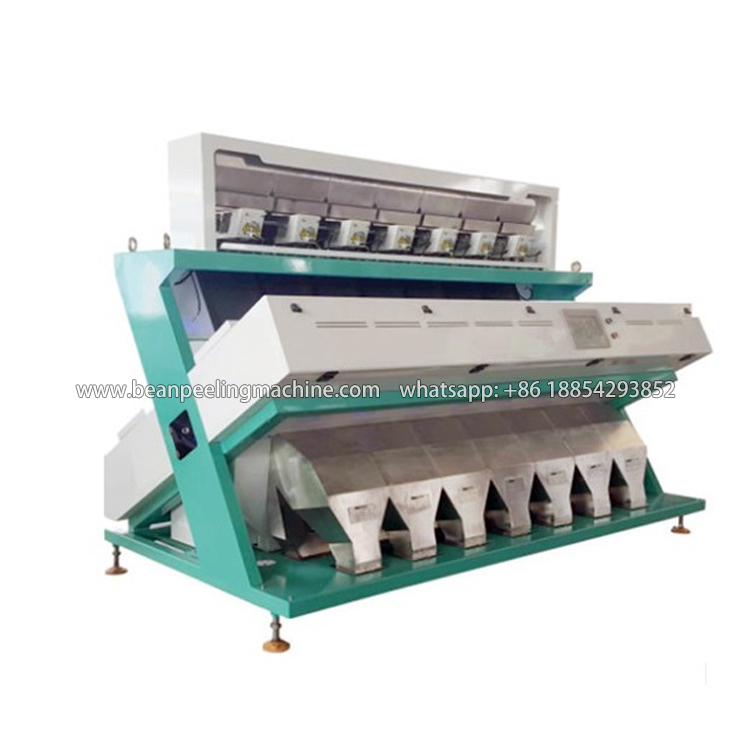

799.webp)

